Probably the effort spent on computational photography by phone companies is greater than that spent by camera manufacturers, even expensive DSLRs only have hand crafted debayer/denoise, while phones use all kinds of neural network magic. Even an RGBW sensor with a simple bilateral filter could do amazing things, but I don't think any digital camera has even that.
Remember when Kodak thought that digital cameras are a fad so they didn't invest? Same thing happening with computational photography right now.
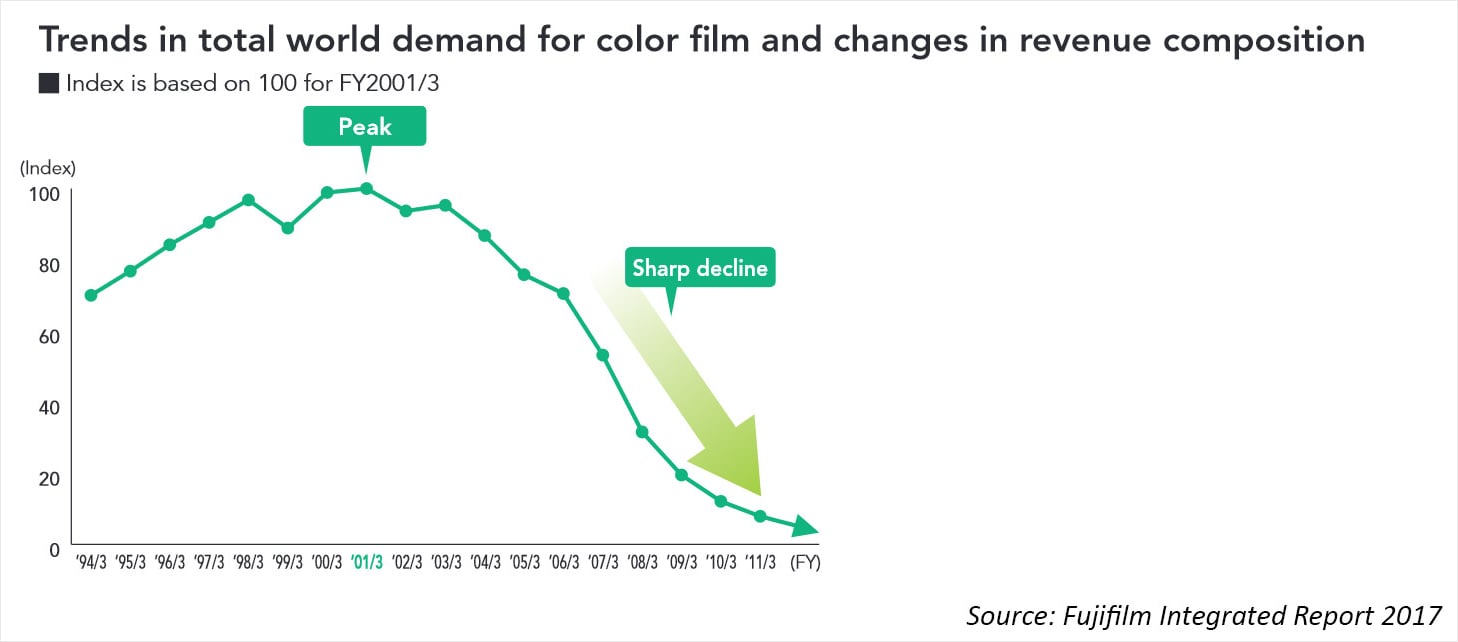
Kodak didn't think that, but they didn't anticipate the incredibly sharp drop in film sales. Kodak was the #1 seller of digital cameras in the US in 2005.
Film sales only fell off a cliff in 2006. [0]
The Kodak story as commonly told is something like "don't be stupid like Kodak". This is easily followed by the thought "I'm not that stupid, I'll be fine".
But the reality is much more nuanced and with a more important lesson.
- We have a product making big money
- In the (far?) future, this will probably change
- How fast?
- How much should we invest in capturing the next thing?
- Given the next thing is fundamentally far removed from what we did (chemicals -> electronics) should we even go there or divest and invest in something else entirely?
Kodak chose to go the digital camera way, but got eaten by electronic giant incumbents like Sony (with their sensors), Nikon and Canon. Yes, Canon and Nikon were already giants in electronics, since their cameras were electronic processor controlled since the 1980s.
Kodak eventually lost money on every Kodak digital camera sold. But even if that gamble had worked, they might have gotten eaten by smartphones just a few years later!


Remember when Kodak thought that digital cameras are a fad so they didn't invest? Same thing happening with computational photography right now.