> Now that there is a drug to repair the BBB (and likely glucose transport as well), I expect the funding will mysteriously show up to properly investigate the "brain diabetes" theory of Alzheimers
Why is this cast as conspiracy versus a natural consequence of risk and incentives? (‘Brain diabetes’ is in no way a neglected avenue of Alzheimer’s research.)
There’s been a long-running Internet movement to cast the beta-amyloid and beta-amyloid/tau hypotheses as an evil plot by scientists to siphon money away from research that works. It’s a whole thing. I anssume it’s because Alzheimer’s legitimately sucks (my mom has it) and that means there has to be someone we can blame.
It's a whole thing because there's been over a century of concerted effort in the US to cast all of science as an evil plot.
The Discovery institute, and all their donors and connections (including literal politicians) tell millions of children that science is a plot of satan to make you doubt god.
The people who created the Scopes "monkey trial" never went away, are fabulously well funded and organized and connected, and have succeeded beyond their wildest dreams
Now they are trying to expand that belief to all of academia, so that people who never set foot in an academic institution and have never tried any higher education beyond high school and have never even attempted to read a scientific paper are convinced that all Academics are in a concerted plot.
30 million Americans claim to believe God created humans exactly as they are now within the past 10k years.
That's the low estimate of christian fundamentalism and science hostile cohort in the US.
The science hostile cohort is flourishing wherever christian fundamentalism is rampant, in some places most people are exactly this. A lot of the depressing things Carl Sagan mentioned in Demon Haunted World turns out to be true. I had thought that 20 years ago we were on our way to being a rational society but it turned out this notion was on its way out.
Cmon the puritans were one of many different founding cohorts. Quakers, borderers, cavaliers, etc. America was never of one mind on the subject of religion.
I mean it doesn't help that a bunch of Harvard scientists were literally caught accepting money to shape the discussion around fat vs sugar which did irreparable damage to a generation of people.
If only those so offended by this and other (comparatively isolated) incidents, don't apply the same level of distrust of those that behave unethically and corruptly on an almost daily basis i.e. oligarchs and politicians. It's like they see a pot calling the kettle black, except the kettle is grey ("boo!") and the pot is vantablack ("I see nothing wrong here").
What on earth does the discovery institute amd creationists have to do with Alzheimer’s research? Come on. Most of the people I’ve seen criticize the amyloid hypothesis are secular.
The bigger problem and the one that is more damaging to public trust in science is actually politicians (and bureaucrats and other government and non-government institutions) who spread disinformation that policy is science. Their policy is "based on the science" they will claim, and therefore to disagree with their policy is to be a "science denier" they assert, without evidence. These dishonest interests essentially hijack the good name of science by fooling low information voters.
There is a lot of science around epidemiology, virology, vaccines, and medicine. There is no evidence based scientific consensus that it was the "correct" policy to shut down large parts of the economy, subsidize mothballed businesses, admit COVID positive patients to nursing homes, impose emergency policies impinging on human rights like restricting travel and association and medical autonomy, or fast-track vaccines for COVID.
You could argue for those policies, but it should have been completely reasonable to argue against them. That does not make you "anti-science". People can and should question the efficacy of the vaccines, and the lies that were repeated by certain "news" corporations and politicians who had interests in and donations from pharmaceutical companies, with fantastical claims about them that turned out to be false. That does not make you "anti-science" either.
Similar thing with the science of greenhouse gasses and global warming. There is a lot of science around the fundamentals of those mechanisms, there is a lot of science showing that warming can gravely damage ecosystems and human societies and therefore limiting human CO2 emissions would be a benefit. That's great, that is science. What is not science is any particular government policy purported to help this. Proposing to reduce or tax GHG emissions in one country and thereby incentivize production in another country (with far higher emissions intensity of production) is not "science". It's not "anti-science" or "climate denier" to question or disagree with a policy like that, for example.
When you say "science", you need to distinguish between science as philosophy vs. science as an institution. Science as philosophy is a way of thinking - an attempt to understand knowledge and reality. The science as an institution on the other hand has all the imperfections as any other institution, since the people in charge are driven by self interest and not just the search for the truth. So, when you say the people distrust science, it seems bizarre that they doubt science as philosophy, while in fact they doubt the institution. It's perfectly fine to mistrust the institution. If you want to consider a few failures, just in the recent years, I have some for you:
- Hungarian-born biochemist Katalin Karikó, who developed the key mRNA modification that enabled effective COVID-19 vaccines, was repeatedly denied grants and demoted during her career. She and her collaborator, Drew Weissman, struggled for years to gain recognition and funding for their work [1]
- On the other hand, the Wuhan Institute of Virology had no trouble getting grants from NIH [2]
- Surgeon General Jerome Adams was saying that masks are not effective against Covid [3]
- Social distancing was of supreme importance, until it turned out that it's fine not to distance if it's for a good cause [4]
> So, when you say the people distrust science, it seems bizarre that they doubt science as philosophy, while in fact they doubt the institution.
The vast, vast, vast majority of the Christian fundamentalists whom are the backbone of this movement and the subject of this discussion do not distinguish between these things. They do not distrust "big science," they distrust science, full stop. The fact that science as an institution is subject to the same corruptive forces as every other institution is a convenient post-hoc rationalization for the belief they already had and wanted to justify, just like a lot of other post-hoc rationalizations they have for other beliefs they have. They dislike science now because they are told to by their ministers, no more reason than that, and we know this because science and their religion coexisted peacefully and uneventfully for centuries until it become inconvenient for a segment of the church's politics. Excluding of course Gallileo, and for the same reasons.
Science (both as philosophy and institution) gets it wrong, but has built-in mechanisms that correct those issues. Eugenics was discredited by science. Andrew Wakefield's bullshit autism study was discredited by science. Religion gets it wrong and then calls it mystery.
It’s especially ironic to hear institutional corruption invoked as a critique of science, when many of the loudest voices in this conversation come from religious institutions that have spent decades shielding their own leadership from accountability for far more egregious abuses.
Not sure it’s a “long-running Internet movement”. You make it sound like one of those loony anti-science conspiracist agendas. There have been a lot of serious articles written about it. I don’t think it’s hard to believe that a lot of scientists and institutions have the incentive to try to keep a whole system of focusing on removing beta-amyloid going as a self-fulfilling cycle. Getting funding and publication citations snd promotions etc. could always be the fundamental incentive out there.
... that said, of course there's some valid criticism of science funding underneath, and (the whole role, purpose, and status of) the academic sphere (with its traditions and privileges) which largely determines the outcome of how grant organizations end doing funding decisions.
I've been doing research as a post-graduate and I can definitely say that a big part of academia is just an echo chamber for what is mainstream. Mainstream is not necessarily bad. But the echo chamber happens uncritically and even in bad research. It is frightening at least.
the problem is that ... there's currently no better theory that matches the data than the amyloid cascade one - as far as I understand (and of course I'm extremely far from an expert on this)
still, I think it's correct to state that it's very hard to falsify the hypothesis, because it says that AD (Alzheimer's disease) goes through the following stages: unknown proximate cause leads to appearance of amyloid plaques which then irreversibility lead to Tau bundles (tangles) which inevitably lead to neurodegeneration which then show up as AD
the model states that by the time the plaques are there it's "too late"
of course there are drugs being tested to try to "solve" this from multiple angles, for example make the progression slow enough to "not matter", prevent the tau bundles, etc.
> There’s been a long-running Internet movement to cast the beta-amyloid and beta-amyloid/tau hypotheses as an evil plot by scientist
No one was twirling their mustache trying to make people suffer. Someone had a lab, and prestige and control over funding and the best way to keep it all was by being dishonest. That negatively affected progress in the field. You can call it "evil" if you want, but more objectively it was unaligned incentives. The corruption was covered in mainstream news, it's not a conspiracy theory. Since the scandal got out, the speed of progress has improved significantly.
It was a concerted and intentional effort to fake data and falsify research into a pervasive deadly disease, specifically in order to hoard funds going to research they knew was, if not a dead end, at least not nearly as promising as they were claiming, preventing those funds from going to other research groups that might actually make progress, essentially stealing donations from a charity, and using their power and clout to attack the reputations of anyone who challenged them. They directly and knowingly added some X years to how long it will take to cure this disease, with X being at least 2 and possibly as much as 10. When Alzheimer's is finally cured, add up all the people who suffered and died from it in the X years before that point, and this research team is directly and knowingly responsible for all of that suffering. Yes, I think I will call it absolutely fucking evil.
Yes, I share some of your concerns about groupthink and research cliques. The best and balanced critique is Karl Herrup’s book at MIT Press: “How Not To Study a Disease”.
Your comment is over the top with respect to NIH-funded researchers doing Alzheimer’s research. The emotion would be entirely appropriate if directed at RJ Reynolds Inc. and other cigarette companies or Purdue Pharma. Those are evil companies that many governments have tolerated killing for profit—Purdue Pharma and the OxyContin disaster alone about 500,000 Americans over 20 years; and US tobacco companies contribute to about as many excess deaths per year.
The systematic image manipulation by a postdoctoral fellow, Dr. Sylvain Lesné, was egregious and worthy of jail time but he was a truly exceptional case and polluted 20 or more papers that did distract the entire field. You can read all about it here.
PMID: 35862524
Piller C. Blots on a field? Science. 2022 377:358-363.
doi: 10.1126/science.add9993
Again, I urge you to read this article and stop promoting conspiracy nonsense. I take this very personally because my mom has this disease, and people who clearly don't understand what they're talking about fuming about conspiracies really doesn't help anyone, and probably hurts them immeasurably. https://www.astralcodexten.com/p/in-defense-of-the-amyloid-h...
I can't guess what point you're trying to make with a long article that acknowledges the fraud in the beginning, and then rehashes the initial reasons for looking into the amyloid hypothesis. No one is claiming it was stupid to look into the amyloid hypothesis. They are complaining that it hasn't been the most promising theory in quite a long time, and it was fraudulently held as the most promising. Other theories, arguably more promising, are listed throughout your article.
There is a testable prediction in your article. Unfortunately, I don't think the mechanism is quite restricted enough. TFA says that repairing the BBB helps amyloid plaque clearance. Would the author of your blog post claim that as a win, or admit that the plaques are downstream of the problem, and that BBB integrity is closer to the root cause of the disease process?
Unfortunately, I don't think the mechanism is quite restricted enough. TFA says that repairing the BBB helps amyloid plaque clearance. Would the author of your blog post claim that as a win, or admit that the plaques are downstream of the problem, and that BBB integrity is closer to the root cause of the disease process?
The author of that blog post, for whom I am in an excellent position to speak, would point to the "sole intended mechanism" clause in the testable prediction. That is, if the therapeutic's developers do not claim any other intended pathway for clinical benefit from improved BBB integrity other than amyloid−β clearance, then it would count. If not, then it would not count, even if it's plausible or even likely that that's the main pathway by which the benefits are accruing.
However, because this is early preclinical research, it's not likely to reach a late-stage clinical trial within the 12-year window of the author's prediction. Furthermore, in every year there are about a dozen of these preclinical studies that go viral for some reason or other, often having little correlation with how promising the science is. I haven't had a chance to look into this one in detail, so this isn't a negative comment about it, but the base rate of this stuff panning out is low, even if it's good research.
The author of that article would also point out that the concept of "the root cause" isn't terribly well-defined, but that strong evidence points to amyloid pathology as the common entrypoint in all cases of Alzheimer's disease, even if multiple upstream factors (some possibly relating to the BBB) can feed into that, depending on the specific case. Similarly, calorie surplus causes obesity in nearly all cases, but the specific cause of calorie surplus may vary from person to person.
I can't guess what point you're trying to make with a long article that acknowledges the fraud in the beginning, and then rehashes the initial reasons for looking into the amyloid hypothesis. No one is claiming it was stupid to look into the amyloid hypothesis. They are complaining that it hasn't been the most promising theory in quite a long time, and it was fraudulently held as the most promising. Other theories, arguably more promising, are listed throughout your article.
A correction: the article does discuss other hypotheses, in pointing out that they can't account for crucial evidence, whereas there isn't any major evidence the amyloid hypothesis seems to have trouble accounting for, and it thus remains very strong.
> No one was twirling their mustache trying to make people suffer. Someone had a lab, and prestige and control over funding and the best way to keep it all was by being dishonest.
The second sentence and the first sentence are merely literal and figurative descriptions of the same activity.
Also, for this to be true, it has to mean lab workers knew about progress but fucked over their own family with Alzheimers. And it has to mean every single one of them did this.
*Edit* Actually there's another way to interpret what you wrote. My mistake. I imagined a scenario where someone knew of progress and was dishonest by hiding it, but you might've been alluding to someone knowing an avenue wasn't fruitful but was dishonest by making it seem more fruitful.
I think the latter is easier to hide than the former since it doesn't require directly fucking over your family, merely very indirectly by siphoning off a fraction of total funds to be flushed down the toilet.
The latter is what happened, for upwards of ten years. And it wasn't a small fraction of the funding -- almost no funding was allocated to any research not looking at amyloid plaques, because the intellectual giants' (falsified) research was showing that that was by far the most promising avenue to explore.
Again, there were a couple of instances of fraud in one sub-branch of a sub-branch of a field ages ago, and The Internet has decided to turn it into a conspiracy theory.
On the off chance that you're actually a decent, honest person, I urge you to actually go learn about this theory that you're promoting. Go out and actually figure out the truth, because if it turns out that you're wrong about the impact and intentions, you're helping to harm a lot of people.


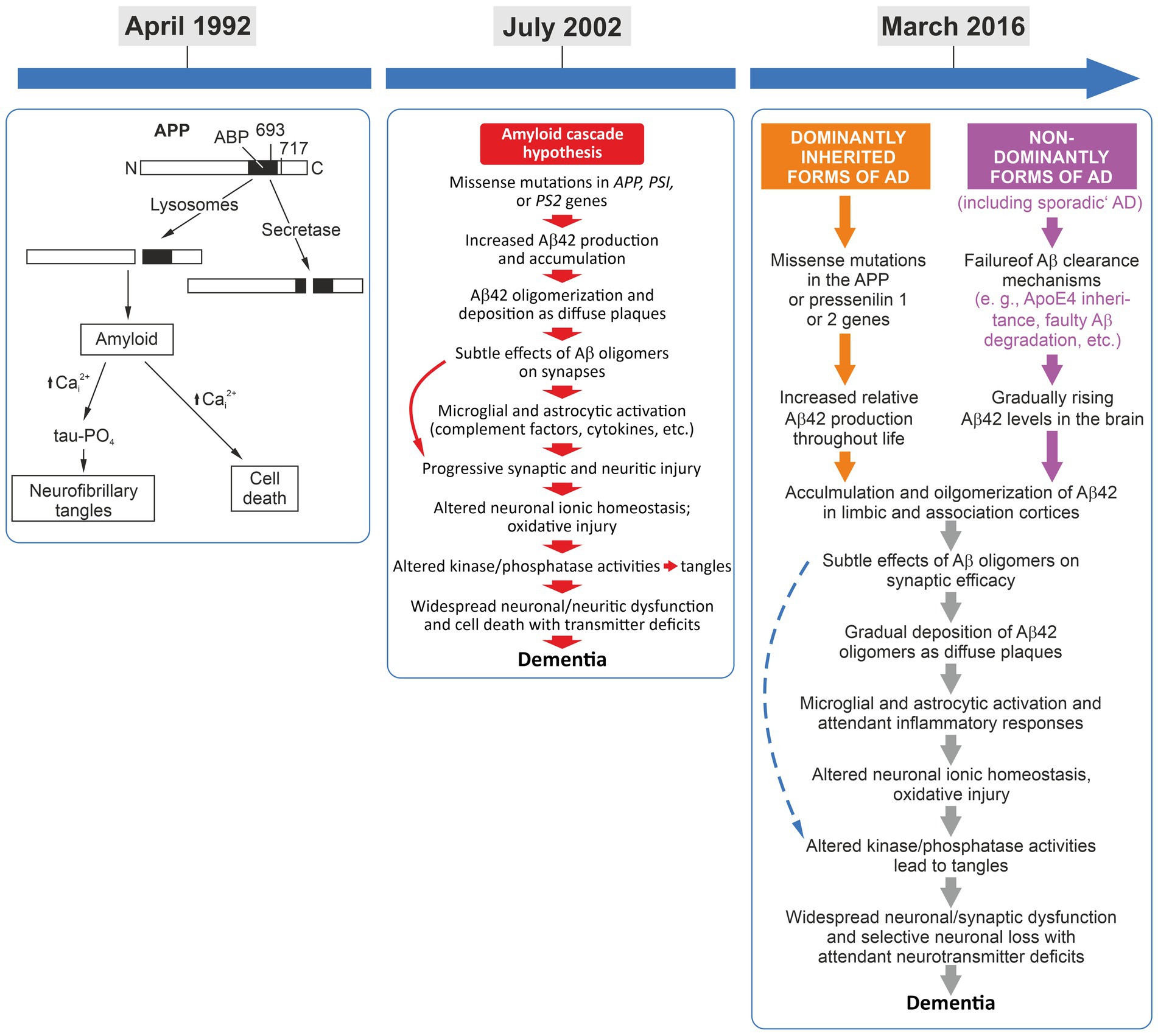
Why is this cast as conspiracy versus a natural consequence of risk and incentives? (‘Brain diabetes’ is in no way a neglected avenue of Alzheimer’s research.)